
Seamless, high-gloss floors for Hamilton stores, showrooms, restaurants and commercial spaces. Polished concrete, metallic epoxy and overnight MMA installs that have you open the next morning.
Free on-site assessment across Hamilton, Stoney Creek, Ancaster, Dundas and Mount Hope. Written scope, fixed price, no obligation.
Retail flooring gets judged on price per square foot, which is the wrong number. The right number is how many trading days it takes and what it does to the room afterwards.
Every day the unit is shut for flooring is revenue gone. That is the figure that should drive the system choice, and it is the one most quotes never mention.
Customers read a floor before they read a sign. Cracked tile, patched vinyl and grey grout say something about the business standing on top of it.
Grout lines and seams take longer to clean and never quite come clean. Going seamless is a permanent reduction in that bill, every week, for years.
Brine and slush tracked onto an untextured entrance is where slip claims come from, and entrances are the cheapest part of the floor to get right.
In Hamilton the buildings are older and the floors underneath are more interesting and more unpredictable. A century building on James Street North can polish up beautifully or expose every patch and conduit chase ever cut into it, and there is no way to know without grinding a test patch.
The floor is the one fixture every single customer makes contact with.
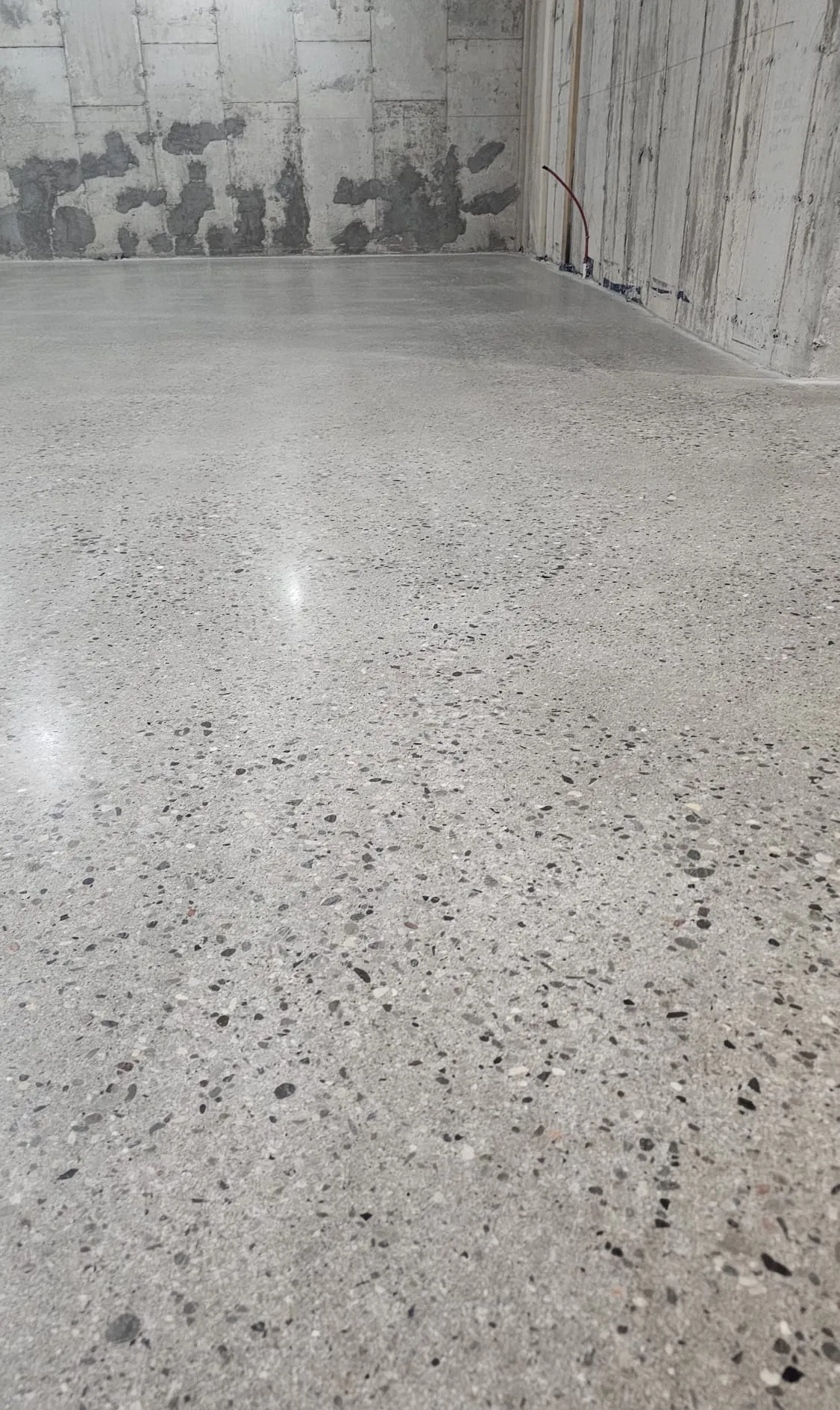
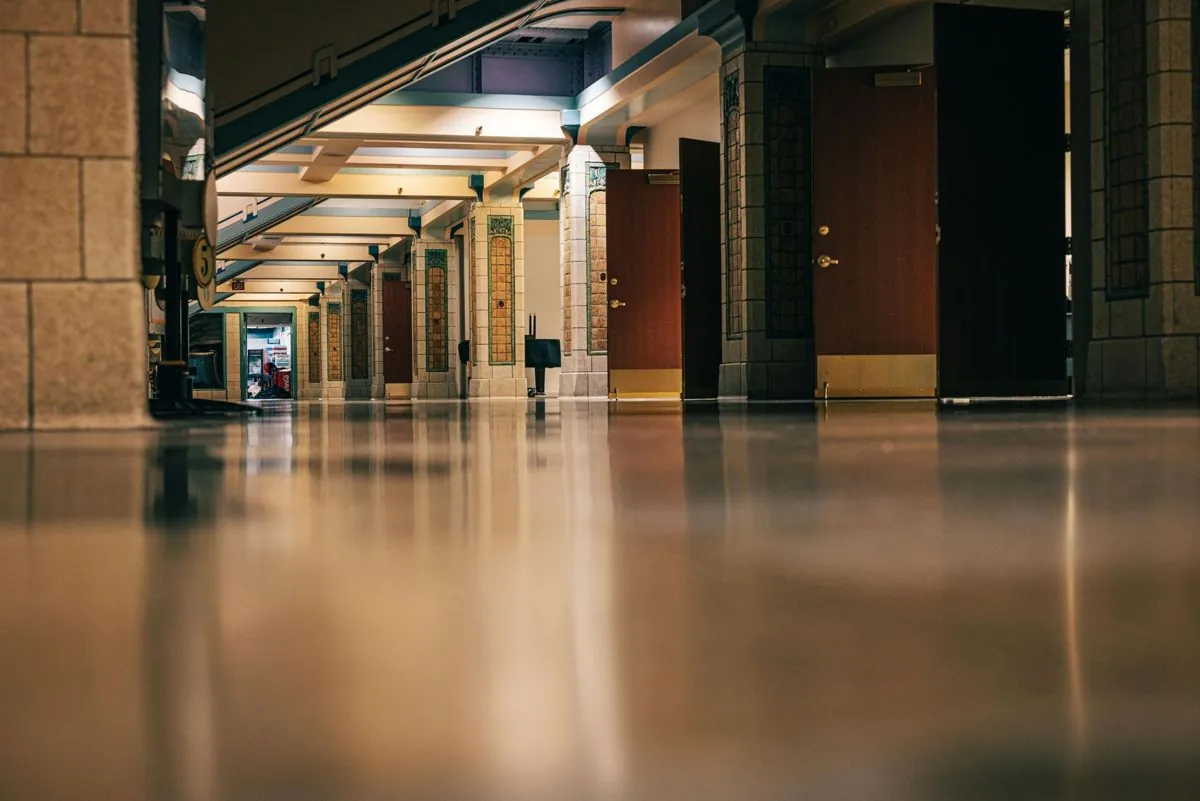
Limeridge Mall and the Upper James and Centennial Parkway big-box corridors are the volume, but a lot of Hamilton's most interesting retail is on James Street North, Ottawa Street and in the downtown core, in century buildings with slabs that were never meant to be a finished floor. That is a gift and a problem. Polished concrete over an old Hamilton slab can look extraordinary, and it can also expose every patch, conduit chase and previous repair in the building. We core, grind a test patch and show you what is actually under the tile before you commit to a look.
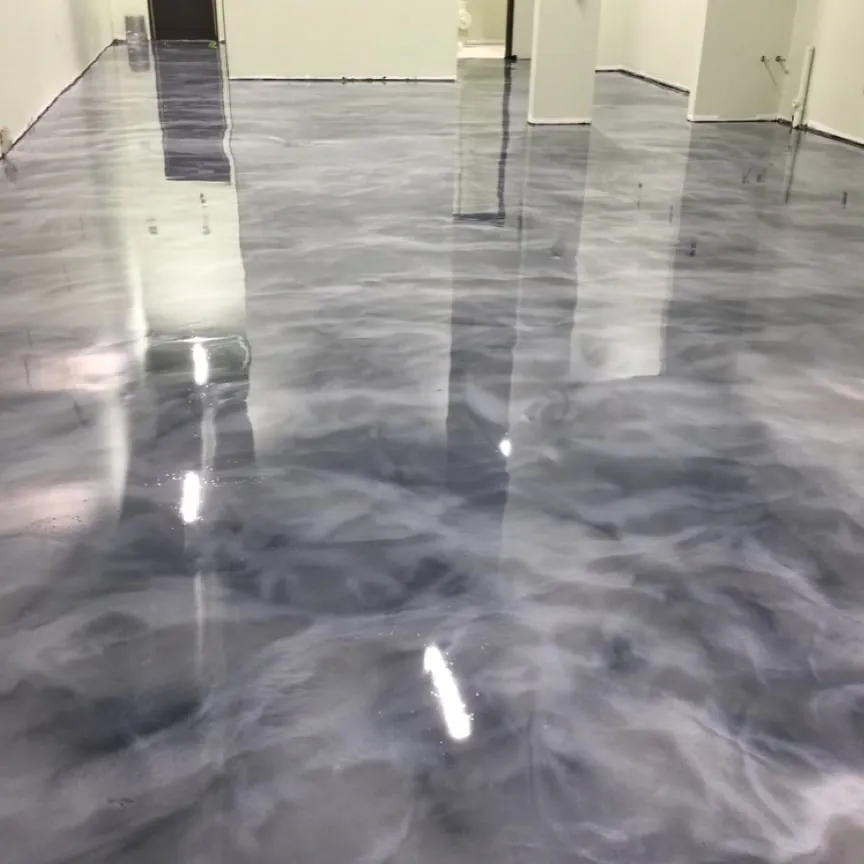
Most requested in Hamilton: polished concrete and metallic floors in heritage storefronts.
Hamilton has the oldest industrial building stock of the three. Bayfront and East Hamilton slabs are frequently mid-century, poured without a vapour retarder, finished with a shake-on hardener and carrying decades of oil and coolant. That is a prep problem before it is a coating problem. Red Hill, Ancaster and the airport lands are newer and far more straightforward.
Hamilton's retail work also comes with parking, loading and heritage considerations that Oakville and Burlington largely do not. Working on James Street North or in the downtown core means staging material off a street with restrictions, working overnight, and sometimes dealing with a building that is protected. None of that changes the floor system, but it changes the plan, and it is the reason a downtown Hamilton storefront quote is not the same as the same square footage in a suburban plaza.
Retail floors are judged on two things: how they look under store lighting and how many trading days they cost you. That pushes the specification toward fast-cure systems and toward finishes that hide cart traffic instead of showing every scuff.
| System | Where it goes | Why it gets specified |
|---|---|---|
| MMA (methyl methacrylate) | Occupied stores, food courts, anywhere closure is expensive | Manufacturer data has MMA ready for normal operations in as little as an hour after installation, with full installs in one to two days. It also cures in extreme temperatures, including well below freezing, which matters for entrances and unheated back-of-house. |
| Polished concrete | Big-box, grocery, showrooms, industrial-look retail | Low maintenance, no coating to peel, and a high-gloss surface that reflects store lighting. The right call where the existing slab is sound and flat. |
| Metallic epoxy | Feature areas, showrooms, boutique retail | Marbled, seamless and genuinely unique per pour. High impact for a feature zone, and it photographs well, which matters more than people admit. |
| Solid colour epoxy with urethane topcoat | Back of house, stockrooms, corridors | Clean, durable, easy to keep and far cheaper than carrying the sales-floor finish into areas nobody sees. |
| Quartz broadcast at entries | Vestibules, entrances, wet zones | Where road salt, slush and rain get tracked in, texture is not decoration. |
We work after close, section the store so half stays trading, protect fixtures and racking, and use fast-cure systems where the calendar demands it. MMA in particular is ready for normal operations in as little as an hour from finishing, which is what makes an overnight turnaround real rather than optimistic.
Book a ConsultationANSI A326.3 sets a 0.42 wet DCOF minimum for interior wet areas and 0.55 where oils and greases are present. We build entrances and vestibules to that, using broadcast aluminum oxide or quartz rather than a texture additive that scrubs off. We also tell customers what the standard itself says: DCOF does not predict whether a person will slip. Mats, drainage and housekeeping still carry half the load.
Read the GuidesShopping carts, pallet jacks, stock trolleys and winter grit are harder on a retail floor than foot traffic ever is. We choose gloss level and topcoat chemistry for how the floor will look in month eighteen, not on opening day, and we will talk you out of a mirror finish in a high-traffic entrance.
See the GalleryOn older Hamilton slabs the preparation is the whole variable, so we test before we price. Book the assessment and you get a fixed number rather than an estimate that moves once the grinder starts.
Golden Horseshoe winters mean brine tracked in from November to April. Entry zones get the heavier build and the more chemical-resistant topcoat.
No grout lines, no tile joints, no edges for a scrubber to skip. Cleaning labour is the running cost most retail floors are actually judged on.
Transitions into tile, carpet or an existing slab are detailed properly. Accepted practice keeps untreated changes in level to a quarter inch, bevels a quarter to a half inch, and ramps anything more.
Solid colours, metallic blends and aggregate mixes matched to the brand palette, sampled before we commit.
There is currently no AODA standard governing flooring inside buildings, so anyone quoting you an AODA floor requirement is guessing. We build to the recognised slip and level-change practice instead.
The stockroom takes more abuse than the sales floor. It gets a system chosen for that, at a price that reflects it.
Hamilton jobs get more preparation time in the quote than anywhere else we work, and that is deliberate. The Bayfront and East Hamilton building stock is old, hard-used and frequently contaminated, and the honest way to price that is to test before quoting rather than discover it on day two. The Red Hill business parks, Ancaster and the Mount Hope airport lands are newer and much more predictable, and we price those accordingly rather than applying a Hamilton premium across the board.
Moisture testing, a bond test on contaminated slabs and a look for shake-on hardeners. On older Hamilton floors this is the difference between a real quote and a guess.
Degreasing, shot blasting and repair are itemised rather than buried, so you can see what you are paying for and why the cheap quote is cheap.
Bay by bay, line by line, on nights and weekends. Fast-cure systems return traffic to a finished section in as little as 4 hours.
Twenty-seven Google reviews, a 5.0 average, and Christopher replies to every one of them personally. On the kind of floors Hamilton has, an owner-operated crew that tests before it quotes is worth more than a bigger name.
"I had the pleasure of working with Surface Coating Experts, owned by Christopher, on a project in our condominium where one of the balconies and walkways required a complete repair."
What customers mention most: garage floor installation, epoxy quality, detailed work, and a smooth process from first quote to finished floor.
Every review gets a personal reply from the owner - the after-the-job care that keeps the rating a perfect 5.0.
This is not a sales call with a clipboard. Hamilton has the oldest industrial building stock we work in, and the honest way to quote a Bayfront or East Hamilton floor is to test it rather than look at it. That is why our Hamilton assessments take longer than most, and why our Hamilton prices tend to hold.
Free. No obligation. Usually within the week.
Prefer to talk it through? Call (905) 876-6957, Monday to Saturday, 6am to 6pm.
Tell us where the floor is and what runs on it. We will come out, test it and put a fixed price in writing.
Same service nearby: Retail in Burlington · Retail in Oakville
On older Hamilton slabs the preparation is the variable, and we would much rather find that at the assessment than halfway through your job. Second, plant, hangar and warehouse shutdown windows get booked early here. If you have a date in mind, the useful move is to get us in front of the floor well ahead of it.
Also see our industrial & commercial overview, epoxy flooring in Hamilton and published pricing.
Tell us the square footage, what runs on the floor and what has already been tried on it. On older Hamilton slabs we test before we price, so the number you get is the number.
Free, no obligation, and you keep the written scope whether you use us or not.