
Seamless, flash-coved, chemically cleanable floors for Burlington pharmaceutical manufacturers, cleanrooms, laboratories, clinics, dental and veterinary practices, compounding pharmacies and licensed cannabis facilities.
Free on-site assessment, usually within days because we are based here in Burlington. Written scope, fixed price, no obligation.
In a regulated room the floor is one of the easiest things for an inspector to write up, and one of the most disruptive things to fix afterwards.
GMP guidance is explicit about sealed, smooth, unbroken surfaces and sealed joints between walls, ceilings and floors. That makes it one of the simplest observations to write and one of the hardest to argue with.
You cannot validate the cleaning of a surface that has open joints, porous patches and 90 degree corners in it. Geometry beats chemistry here every time.
Taking a production or clinical room out of service is the largest cost in the whole project by a wide margin. That is precisely why cure time should drive the system choice.
A monolithic floor blistering six months after qualification is not a repair. It is a shutdown, a deviation and a re-validation.
Burlington carries the most clinical work of the three cities, and there the binding constraint is almost never the specification, it is the calendar. A room that cannot be out of service for more than one night rules out most systems before the conversation about topcoats even starts.
The room being out of service is the cost. The floor itself is the small number.
Boehringer Ingelheim Canada, Thermo Fisher Scientific and Ottobock are all in Burlington, with Joseph Brant Hospital anchoring the clinical side, which makes this the strongest pharmaceutical and medical-grade market of the three cities we serve. The work splits into two very different jobs. Pharmaceutical production and lab floors are planned months out, specified against GMP surface language and installed to a validated sequence. Clinical and hospital floors are the opposite: urgent, occupied, and needing to be back in service the same night, which is exactly what MMA exists for.
Most requested in Burlington: GMP production floors and overnight clinical installs.
Harvester Road and the North Service Road stock dates to the 1960s through 1980s, which usually means a hard-troweled slab with no vapour retarder under it and decades of soaked-in product. The 407 Corridor and Bronte Creek Meadows are Burlington's newest inventory, where green concrete and slab moisture are the risk instead.
Because Burlington carries the most clinical work of the three cities, we are set up for the version of this job where the space cannot be handed over dirty. That means containment, extraction, negative pressure and a documented clean handover rather than a broom finish and a wave. On an occupied hospital or clinic floor, infection control usually has as much say in how we work as facilities does, and it is far better to have that conversation in the planning meeting than at eleven at night with the hoarding half up.
Health Canada's GMP guidance is specific about surfaces: seal porous materials, keep them hard, smooth and free of sharp corners where material can collect, seal the joints between walls, ceilings and floors, and screen and trap floor drains. Most of that is geometry, not chemistry, which is why coving and terminations get more of our attention than the topcoat does.
| System | Where it goes | Why it gets specified |
|---|---|---|
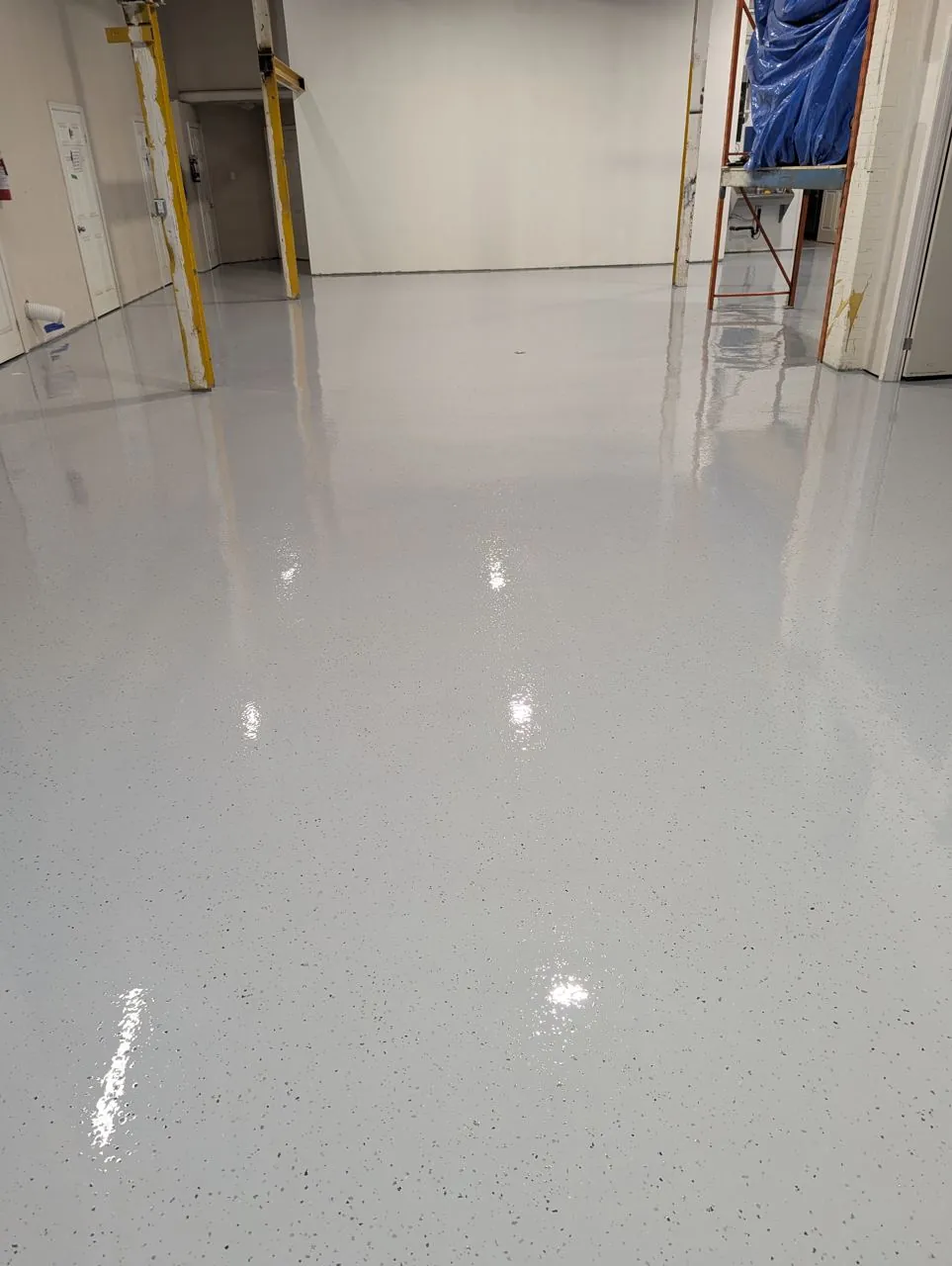
| Seamless self-levelling epoxy, 1.5 to 3 mm | Production areas, labs, packaging, corridors | Monolithic and pinhole free, with flash coving carried up the wall so there is no floor to wall joint at all. The baseline for a GMP production floor. |
| MMA (methyl methacrylate) | Occupied hospitals, clinics, pharmacies, anywhere downtime is the constraint | Full chemical and physical cure in one to two hours from completion, each coat around an hour, and it installs at floor temperatures down to -30°C. The trade-off is a strong odour during installation, managed with extraction, negative pressure and off-hours scheduling. |
| Static dissipative epoxy | Powder handling, solvent areas, combustible dust zones | Where dust or solvent vapour is a hazard, the floor becomes part of the bonding and grounding strategy. NFPA 660 now consolidates the combustible dust standards, and hazardous location bonding also sits under the Canadian Electrical Code. |
| Chemical resistant urethane topcoat | Labs, reagent handling, disinfectant heavy areas | Disinfectant and reagent resistance is product specific. We pull the resistance chart for the exact system against your actual cleaning protocol rather than promising general resistance. |
| Flash coving and integral base | Every wall junction, plinth, door threshold | The joint between the wall and the floor is where GMP inspections and microbial swabs both concentrate. It gets designed, not caulked. |
Health Canada's GUI-0001, under C.02.004 premises, asks you to seal porous materials, keep surfaces hard, smooth and free of sharp corners where extraneous material can collect, seal the joints between walls, ceilings and floors, and screen and trap floor drains. The sterile guidance goes further: exposed surfaces smooth, impervious and unbroken to minimise shedding and accumulation, materials that generate minimal particles, and surfaces that tolerate repeated cleaning, disinfectant and sporicidal agents. We specify to that wording and give you the data sheets for your file.
Read the GuidesHospitals, clinics and pharmacies cannot give you a week. MMA reaches full chemical and physical cure in one to two hours from completion, with each coat curing in about an hour, and it can be laid at floor temperatures down to -30°C. The catch is odour during install, which we manage with containment, extraction and negative pressure, and by working nights and weekends. We will be upfront about it rather than surprising your facilities team at 2am.
Book a ConsultationThere is no Health Canada approved floor and no cGMP certified installer. Health Canada licenses drug establishments, not flooring. A cleanroom is classified to ISO 14644 by an accredited testing body after commissioning, not by its floor. And disinfectant resistance, whether that is vaporised hydrogen peroxide, iodophors, bleach or phenolics, has to come off the specific product's chemical resistance chart, because there is no generic figure. We install to your spec and hand over documentation. We do not manufacture certifications.
See PricingWe are local, so the assessment is normally days away rather than weeks. We test the slab, write the scope and give you a fixed price, and you are not committing to anything by finding out.
ISO 14644-1 caps particles at or above 0.5 microns per cubic metre at 3,520 for ISO 5, 35,200 for ISO 6, 352,000 for ISO 7 and 3,520,000 for ISO 8. A non-shedding floor is one input to holding that.
Carried up the wall and terminated into a cap, so the floor and wall are one continuous surface with no joint to swab.
Where drains exist, they get detailed to the GMP requirement rather than coated around.
Powder handling brings bonding and grounding into scope under NFPA 660 and the Canadian Electrical Code hazardous location rules. That is an engineered specification, not an upsell.
Tell us your cleaning agents, dwell times and frequency before we specify. That list determines the topcoat, not the other way around.
Product data sheets, batch records where the manufacturer provides them, and warranty paperwork in a form your quality system can file.
Burlington is our home base, which in practice means a shorter lead time and easier site visits than anywhere else we work. The industrial stock along Harvester Road, Mainway and the North Service Road is mature and generally straightforward to get into, with real dock access and room to stage. What catches people out here is the slab, not the schedule: a lot of these floors have been sealed, patched, painted and re-sealed over forty years, and all of that has to come off before anything new goes down.
Being based in Burlington means we can usually get eyes on the floor within days rather than weeks, and take moisture readings on the same visit.
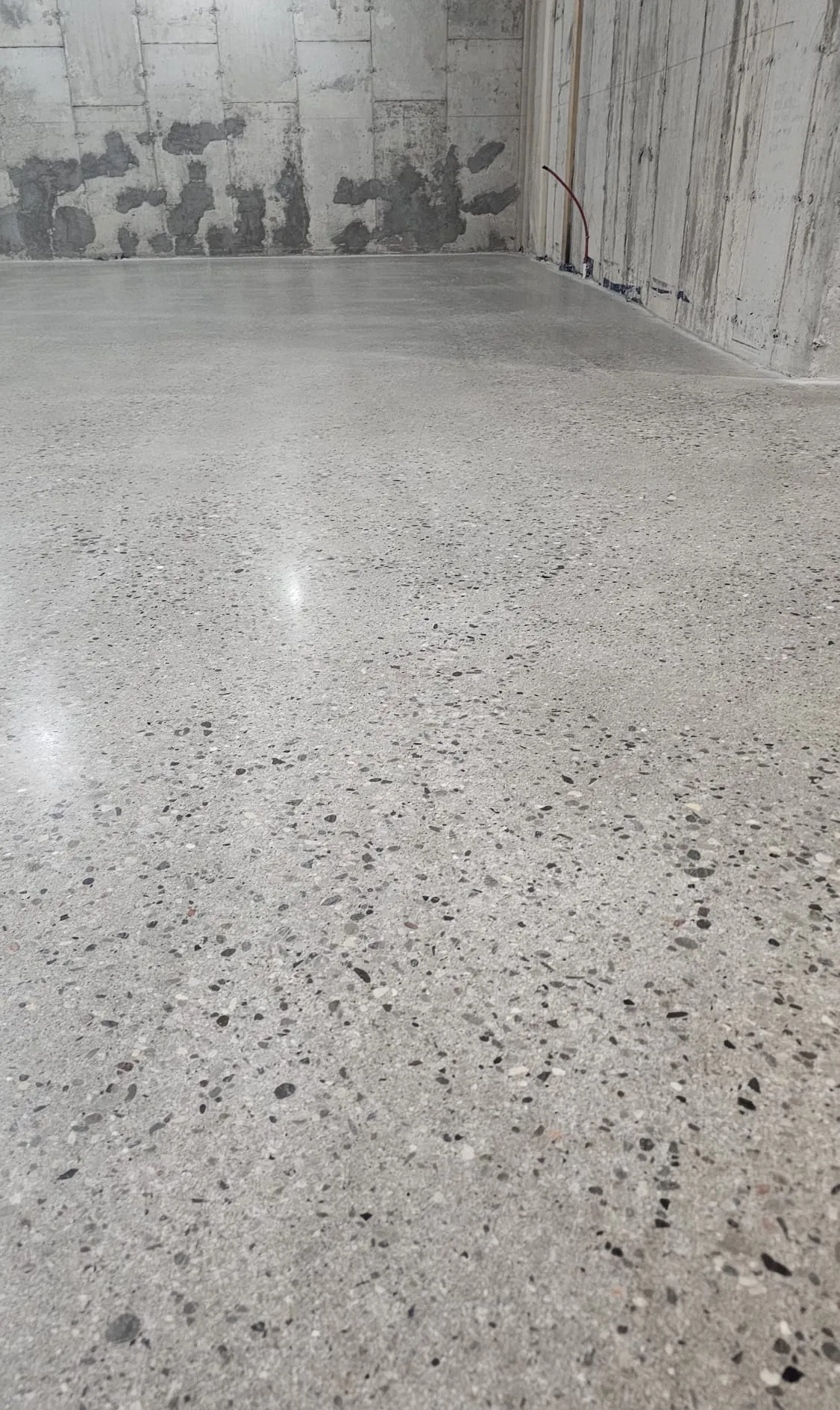
Old coatings, sealers and shake-on hardeners are removed mechanically to the profile the new system needs. This is the step that decides whether the floor lasts.
We work in sections around your hours, then hand over data sheets, a maintenance sheet and a 5-year warranty on the installed system.
Twenty-seven Google reviews, a 5.0 average, and Christopher replies to every one of them personally. Being based in Burlington also means the people who quoted your floor are the people who show up to install it.
"I had the pleasure of working with Surface Coating Experts, owned by Christopher, on a project in our condominium where one of the balconies and walkways required a complete repair."
What customers mention most: garage floor installation, epoxy quality, detailed work, and a smooth process from first quote to finished floor.
Every review gets a personal reply from the owner - the after-the-job care that keeps the rating a perfect 5.0.
This is not a sales call with a clipboard. Burlington is our home base, so the assessment is quick to arrange and we already know the building stock: Harvester Road and North Service Road floors that have been sealed, patched and re-sealed for forty years, and 407 Corridor buildings where the concrete is still green. Both are workable. Both need testing first.
Free. No obligation. Usually within the week.
Prefer to talk it through? Call (905) 876-6957, Monday to Saturday, 6am to 6pm.
Tell us where the floor is and what runs on it. We will come out, test it and put a fixed price in writing.
Same service nearby: Pharmaceutical & Medical-Grade in Oakville · Pharmaceutical & Medical-Grade in Hamilton
We are based in Burlington, so the assessment itself is usually days away rather than weeks. What takes real time is materials on a specialist system, and the mitigation step if the slab tests wet. Getting the testing done early does not commit you to anything, it just means the date you eventually pick is a date we can actually hold.
Also see our industrial & commercial overview, epoxy flooring in Burlington and published pricing.
We are based in Burlington, so a site visit is usually days away rather than weeks. Tell us the square footage and what the floor has to survive, and we will test it and price it properly.
Free, no obligation, and you keep the written scope whether you use us or not.