
Seamless, flash-coved, chemically cleanable floors for Hamilton pharmaceutical manufacturers, cleanrooms, laboratories, clinics, dental and veterinary practices, compounding pharmacies and licensed cannabis facilities.
Free on-site assessment across Hamilton, Stoney Creek, Ancaster, Dundas and Mount Hope. Written scope, fixed price, no obligation.
In a regulated room the floor is one of the easiest things for an inspector to write up, and one of the most disruptive things to fix afterwards.
GMP guidance is explicit about sealed, smooth, unbroken surfaces and sealed joints between walls, ceilings and floors. That makes it one of the simplest observations to write and one of the hardest to argue with.
You cannot validate the cleaning of a surface that has open joints, porous patches and 90 degree corners in it. Geometry beats chemistry here every time.
Taking a production or clinical room out of service is the largest cost in the whole project by a wide margin. That is precisely why cure time should drive the system choice.
A monolithic floor blistering six months after qualification is not a repair. It is a shutdown, a deviation and a re-validation.
In Hamilton a good share of this work goes into buildings never designed for it, including licensed production fitted into older industrial stock. The slab inherits whatever it was doing before, and finding that out after the room is commissioned is a shutdown rather than a line item.
The room being out of service is the cost. The floor itself is the small number.
The West Hamilton Innovation District and McMaster Innovation Park anchor the research end of Hamilton's life sciences sector, with Hamilton Health Sciences and St. Joseph's carrying the clinical load, and both the Ancaster Business Park and the Red Hill business parks listing life sciences among their tenant sectors. Hamilton also has a meaningful licensed cannabis production presence, which brings the same seamless, cleanable, coved requirements under a different regulatory heading. As with everything else here, building age is the variable: a Red Hill or Ancaster facility is straightforward, and a converted older building needs the slab proven before anything gets specified over it.
Most requested in Hamilton: seamless coved floors in labs and licensed production rooms.
Hamilton has the oldest industrial building stock of the three. Bayfront and East Hamilton slabs are frequently mid-century, poured without a vapour retarder, finished with a shake-on hardener and carrying decades of oil and coolant. That is a prep problem before it is a coating problem. Red Hill, Ancaster and the airport lands are newer and far more straightforward.
Hamilton adds one more variable, which is that a good share of this work happens in buildings that were never designed for it. A lab or a licensed production room fitted into older industrial stock inherits whatever the slab was doing before, and the honest sequence is to prove the concrete before the room design is locked. We have tested slabs in Hamilton that needed mitigation nobody had budgeted for, and finding that at design stage is a line item, while finding it after commissioning is a shutdown.
Health Canada's GMP guidance is specific about surfaces: seal porous materials, keep them hard, smooth and free of sharp corners where material can collect, seal the joints between walls, ceilings and floors, and screen and trap floor drains. Most of that is geometry, not chemistry, which is why coving and terminations get more of our attention than the topcoat does.
| System | Where it goes | Why it gets specified |
|---|---|---|
| Seamless self-levelling epoxy, 1.5 to 3 mm | Production areas, labs, packaging, corridors | Monolithic and pinhole free, with flash coving carried up the wall so there is no floor to wall joint at all. The baseline for a GMP production floor. |
| MMA (methyl methacrylate) | Occupied hospitals, clinics, pharmacies, anywhere downtime is the constraint | Full chemical and physical cure in one to two hours from completion, each coat around an hour, and it installs at floor temperatures down to -30°C. The trade-off is a strong odour during installation, managed with extraction, negative pressure and off-hours scheduling. |
| Static dissipative epoxy | Powder handling, solvent areas, combustible dust zones | Where dust or solvent vapour is a hazard, the floor becomes part of the bonding and grounding strategy. NFPA 660 now consolidates the combustible dust standards, and hazardous location bonding also sits under the Canadian Electrical Code. |
| Chemical resistant urethane topcoat | Labs, reagent handling, disinfectant heavy areas | Disinfectant and reagent resistance is product specific. We pull the resistance chart for the exact system against your actual cleaning protocol rather than promising general resistance. |
| Flash coving and integral base | Every wall junction, plinth, door threshold | The joint between the wall and the floor is where GMP inspections and microbial swabs both concentrate. It gets designed, not caulked. |
Health Canada's GUI-0001, under C.02.004 premises, asks you to seal porous materials, keep surfaces hard, smooth and free of sharp corners where extraneous material can collect, seal the joints between walls, ceilings and floors, and screen and trap floor drains. The sterile guidance goes further: exposed surfaces smooth, impervious and unbroken to minimise shedding and accumulation, materials that generate minimal particles, and surfaces that tolerate repeated cleaning, disinfectant and sporicidal agents. We specify to that wording and give you the data sheets for your file.
Read the GuidesHospitals, clinics and pharmacies cannot give you a week. MMA reaches full chemical and physical cure in one to two hours from completion, with each coat curing in about an hour, and it can be laid at floor temperatures down to -30°C. The catch is odour during install, which we manage with containment, extraction and negative pressure, and by working nights and weekends. We will be upfront about it rather than surprising your facilities team at 2am.
Book a ConsultationThere is no Health Canada approved floor and no cGMP certified installer. Health Canada licenses drug establishments, not flooring. A cleanroom is classified to ISO 14644 by an accredited testing body after commissioning, not by its floor. And disinfectant resistance, whether that is vaporised hydrogen peroxide, iodophors, bleach or phenolics, has to come off the specific product's chemical resistance chart, because there is no generic figure. We install to your spec and hand over documentation. We do not manufacture certifications.
See PricingOn older Hamilton slabs the preparation is the whole variable, so we test before we price. Book the assessment and you get a fixed number rather than an estimate that moves once the grinder starts.
ISO 14644-1 caps particles at or above 0.5 microns per cubic metre at 3,520 for ISO 5, 35,200 for ISO 6, 352,000 for ISO 7 and 3,520,000 for ISO 8. A non-shedding floor is one input to holding that.
Carried up the wall and terminated into a cap, so the floor and wall are one continuous surface with no joint to swab.
Where drains exist, they get detailed to the GMP requirement rather than coated around.
Powder handling brings bonding and grounding into scope under NFPA 660 and the Canadian Electrical Code hazardous location rules. That is an engineered specification, not an upsell.
Tell us your cleaning agents, dwell times and frequency before we specify. That list determines the topcoat, not the other way around.
Product data sheets, batch records where the manufacturer provides them, and warranty paperwork in a form your quality system can file.
Hamilton jobs get more preparation time in the quote than anywhere else we work, and that is deliberate. The Bayfront and East Hamilton building stock is old, hard-used and frequently contaminated, and the honest way to price that is to test before quoting rather than discover it on day two. The Red Hill business parks, Ancaster and the Mount Hope airport lands are newer and much more predictable, and we price those accordingly rather than applying a Hamilton premium across the board.
Moisture testing, a bond test on contaminated slabs and a look for shake-on hardeners. On older Hamilton floors this is the difference between a real quote and a guess.
Degreasing, shot blasting and repair are itemised rather than buried, so you can see what you are paying for and why the cheap quote is cheap.
Bay by bay, line by line, on nights and weekends. Fast-cure systems return traffic to a finished section in as little as 4 hours.
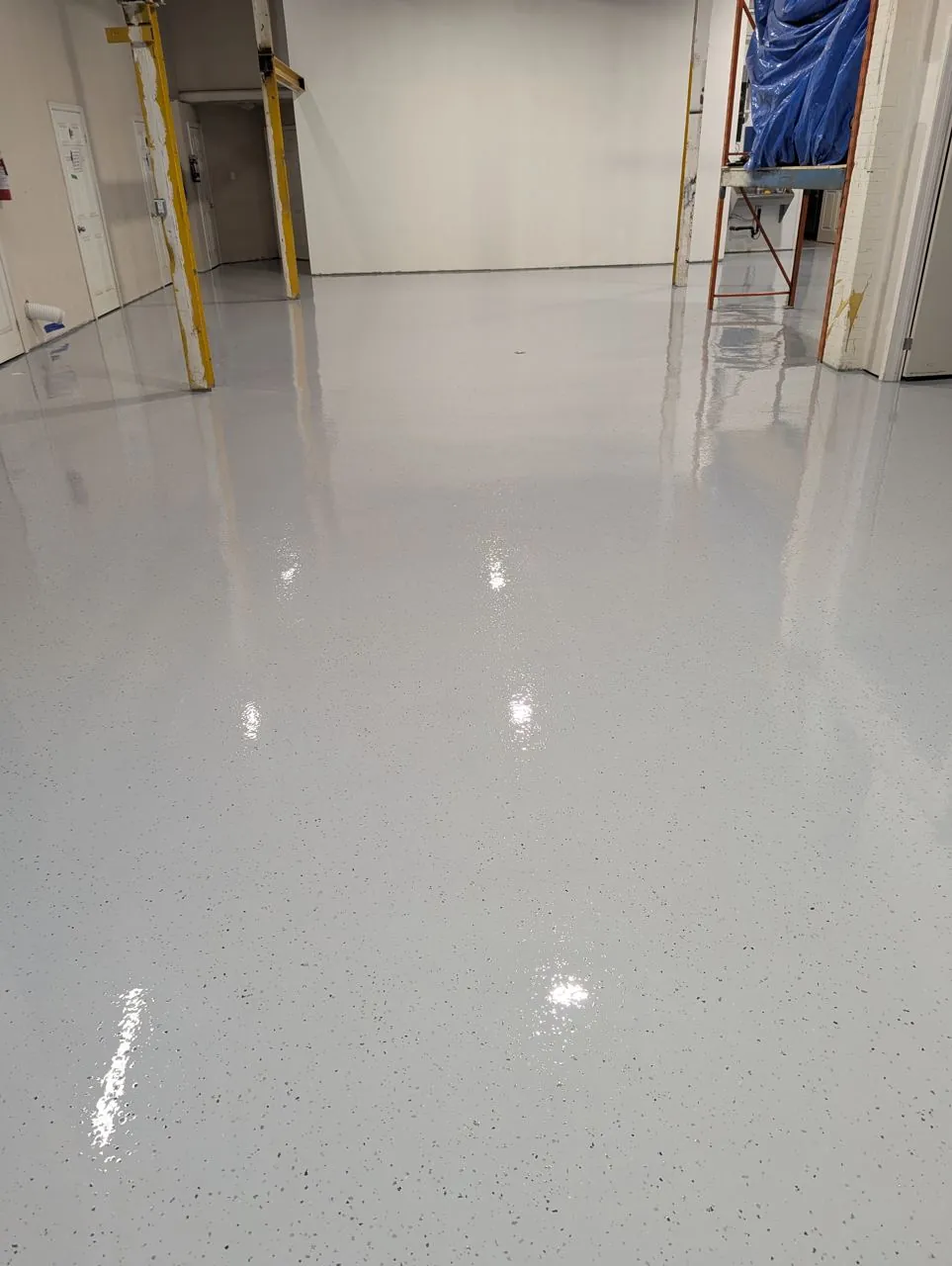
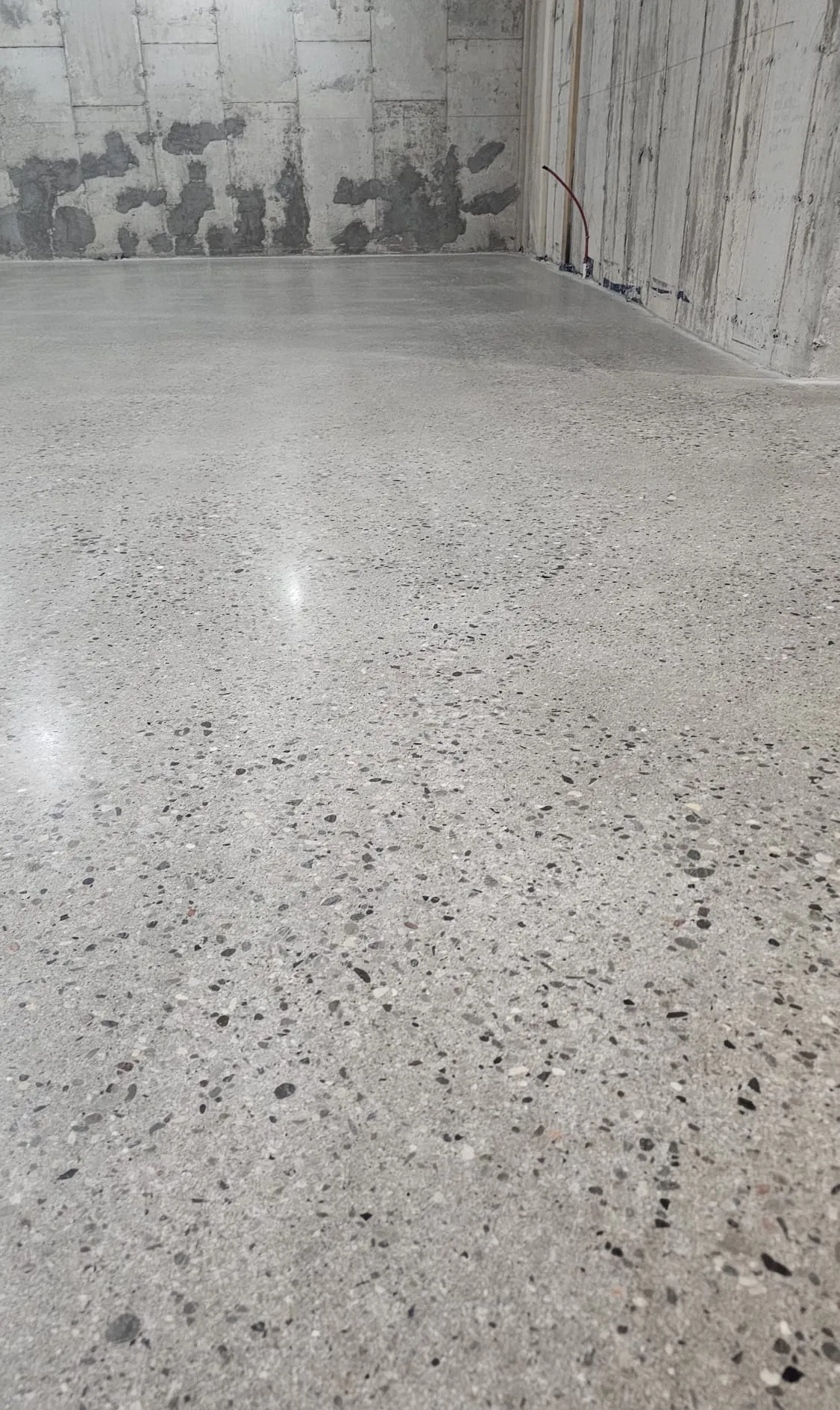
Twenty-seven Google reviews, a 5.0 average, and Christopher replies to every one of them personally. On the kind of floors Hamilton has, an owner-operated crew that tests before it quotes is worth more than a bigger name.
"I had the pleasure of working with Surface Coating Experts, owned by Christopher, on a project in our condominium where one of the balconies and walkways required a complete repair."
What customers mention most: garage floor installation, epoxy quality, detailed work, and a smooth process from first quote to finished floor.
Every review gets a personal reply from the owner - the after-the-job care that keeps the rating a perfect 5.0.
This is not a sales call with a clipboard. Hamilton has the oldest industrial building stock we work in, and the honest way to quote a Bayfront or East Hamilton floor is to test it rather than look at it. That is why our Hamilton assessments take longer than most, and why our Hamilton prices tend to hold.
Free. No obligation. Usually within the week.
Prefer to talk it through? Call (905) 876-6957, Monday to Saturday, 6am to 6pm.
Tell us where the floor is and what runs on it. We will come out, test it and put a fixed price in writing.
Same service nearby: Pharmaceutical & Medical-Grade in Burlington · Pharmaceutical & Medical-Grade in Oakville
On older Hamilton slabs the preparation is the variable, and we would much rather find that at the assessment than halfway through your job. Second, plant, hangar and warehouse shutdown windows get booked early here. If you have a date in mind, the useful move is to get us in front of the floor well ahead of it.
Also see our industrial & commercial overview, epoxy flooring in Hamilton and published pricing.
Tell us the square footage, what runs on the floor and what has already been tried on it. On older Hamilton slabs we test before we price, so the number you get is the number.
Free, no obligation, and you keep the written scope whether you use us or not.