
Static dissipative and conductive floor systems for Oakville electronics manufacturers, PCB and assembly operations, data centres and battery facilities. Grounded, installed as a system and resistance tested on handover.
Free on-site assessment anywhere in Oakville, written scope, fixed price. No obligation, and no pressure if the answer is not this quarter.
This is the one category where the damage is usually invisible, which is exactly why it goes unfixed for years.
Electrostatic damage is frequently latent. The part passes test, fails in the field, and the warranty claim never gets connected to the floor it was assembled on.
If the floor was never tested to ANSI/ESD S7.1 and you hold no resistance results, your compliance verification plan has a hole in it that an auditor will find before you do.
A dissipative coating with no grounding grid and no earth points measures nothing useful. A lot of facilities are paying for an ESD floor they do not actually have.
Bare slab under a raised access floor sheds continuously into equipment that is spending energy filtering it back out.
In Oakville the most common finding is scope rather than failure: rooms with a grounded system that never needed one, and rooms handling sensitive assemblies with nothing but a sealed floor. Both are expensive mistakes and both come from nobody drawing the EPA boundary properly.
The floor is a small number next to one field failure you cannot explain.
Siemens Canada and Geotab are among Oakville's larger technology names, and nuclear sits on Invest Oakville's advanced manufacturing sub-sector list alongside aerospace and machinery, which tells you there are more controlled and grounded environments in this town than the skyline suggests. Most of it is in Winston Park and the QEW districts. The specification conversation in Oakville is usually about scope: which rooms are genuinely an EPA needing a grounded system, and which are just clean rooms that need a good sealed floor. Getting that boundary right is worth real money, because grounded systems cost more and are wasted outside the zone that needs them.
Most requested in Oakville: dissipative floors in defined EPA zones, sealed epoxy elsewhere.
South Oakville's employment districts are mature and close to fully built out, so we see a lot of 1970s to 1990s slabs poured before under-slab vapour retarders were standard. North Oakville and the Highway 407 lands are the opposite problem: new concrete that is still giving off moisture. Either way we test before we quote.
One more Oakville-specific point on scope. Several of the controlled environments we are asked to quote here turn out not to need a grounded floor at all, and are really asking for a clean, sealed, easily cleaned surface that does not shed. Those are much cheaper and much faster to install. We will say so, because selling a grounded system into a room that does not need one is easy money and it is the kind of thing that gets found out at the first audit.
ANSI/ESD S20.20 does not care what the coating tin says. It asks for a flooring and footwear system measuring under 1.0 x 10⁹ ohms and a peak body voltage under 100 V. Both. A dissipative coating installed without a grounding grid meets neither, and that is the most common ESD floor failure we get called in to fix.
| System | Where it goes | Why it gets specified |
|---|---|---|
| Static dissipative epoxy | EPA workstations, assembly, PCB handling, test areas | Dissipative sits above 1.0 x 10⁶ and below 1.0 x 10⁹ ohms resistance to ground. Typically 2 to 3 mm, foot traffic at 24 hours, heavy traffic at 48, full cure at 7 days. |
| Conductive epoxy | Higher risk areas, explosives-adjacent, some battery work | Conductive is 1.0 x 10⁶ ohms and below. A lower resistance is not automatically better, it is a different design decision, and it has electrical safety implications. |
| Copper grounding grid and earth points | Underneath the whole system | Copper tape bridging joints, tied to earth points installed with redundancy. Manufacturer guidance calls for a minimum of two earth points per floor area so a single failure does not orphan the floor. |
| Standard high-build epoxy | Data centre halls, corridors, non-EPA areas | Not everything needs to be ESD. Sealing bare slab under and around a raised access floor kills dust without paying for a grounded system where you do not need one. |
| Handover resistance testing | Every ESD install | Point-to-point and point-to-groundable-point testing per ANSI/ESD S7.1, with results documented for your compliance verification plan. |
The floor is one element in a grounded path. We install a conductive primer, lay copper tape bridging the joints, tie into earth points placed with redundancy, and have the earth linkage cabling specified by a qualified electrical engineer rather than guessed at. A dissipative coating rolled over bare concrete with no grid is not an ESD floor, whatever the data sheet says.
Book a Site VisitANSI/ESD S7.1 characterises floor material resistance point-to-point and point-to-groundable-point, both under 1.0 x 10⁹ ohms for S20.20. We test at completion and hand you the results. S20.20 also requires a compliance verification plan with periodic retesting, and the interval is set by your facility rather than by the standard, so we will not invent one for you.
Read the GuidesWe do not sell ESD S20.20 certified floors, because S20.20 certifies a facility's ESD control programme, not a coating and not a contractor. What we install is a floor that can be qualified within your programme, tested and documented. We also avoid the word anti-static: it is not a standardised term, it usually just means reduced tribocharging, and it has no verified resistance range or ground path behind it.
See PricingBook the free on-site assessment. We test the slab, write the scope and give you a fixed price. Finding out costs you an hour and commits you to nothing.
Conductive is 1.0 x 10⁶ ohms and below. Dissipative is above 1.0 x 10⁶ and below 1.0 x 10⁹. Test method is ASTM F150 and ANSI/ESD S7.1.
S20.20 requires peak body voltage under 100 V per ANSI/ESD STM97.2, measured with the footwear in use. Resistance alone is not compliance.
In a data centre the coated slab often sits under a raised floor whose stringers and pedestals carry their own grounding. We coordinate rather than assume.
Sealing bare concrete beneath a raised access floor is one of the highest value, lowest cost jobs in a data hall.
Loaded server carts are harder on a floor than anything else in the building, so abrasion resistance drives the topcoat choice.
We work to the spec your programme sets. If you do not have one yet, we will tell you that the floor is only one element of it.
Oakville splits into two working realities. South of Dundas the buildings are older, tenanted and busy, so access, parking and elevator or dock time drive the schedule as much as the coating does. North of Dundas and out toward Highway 407 the buildings are newer, easier to work in, and the constraint is usually concrete that has not finished drying. We quote them differently because they are different jobs.
We come out, measure, take moisture readings and look at what the floor has been through. On south Oakville stock we assume no vapour retarder until testing says otherwise.
The quote states the system, the build thickness, the preparation method and the phasing plan, so you know which areas go down on which nights before you sign anything.
Nights, weekends and shutdown windows, sectioned so the building keeps working. Fast-cure topcoats put traffic back on a finished section in as little as 4 hours.
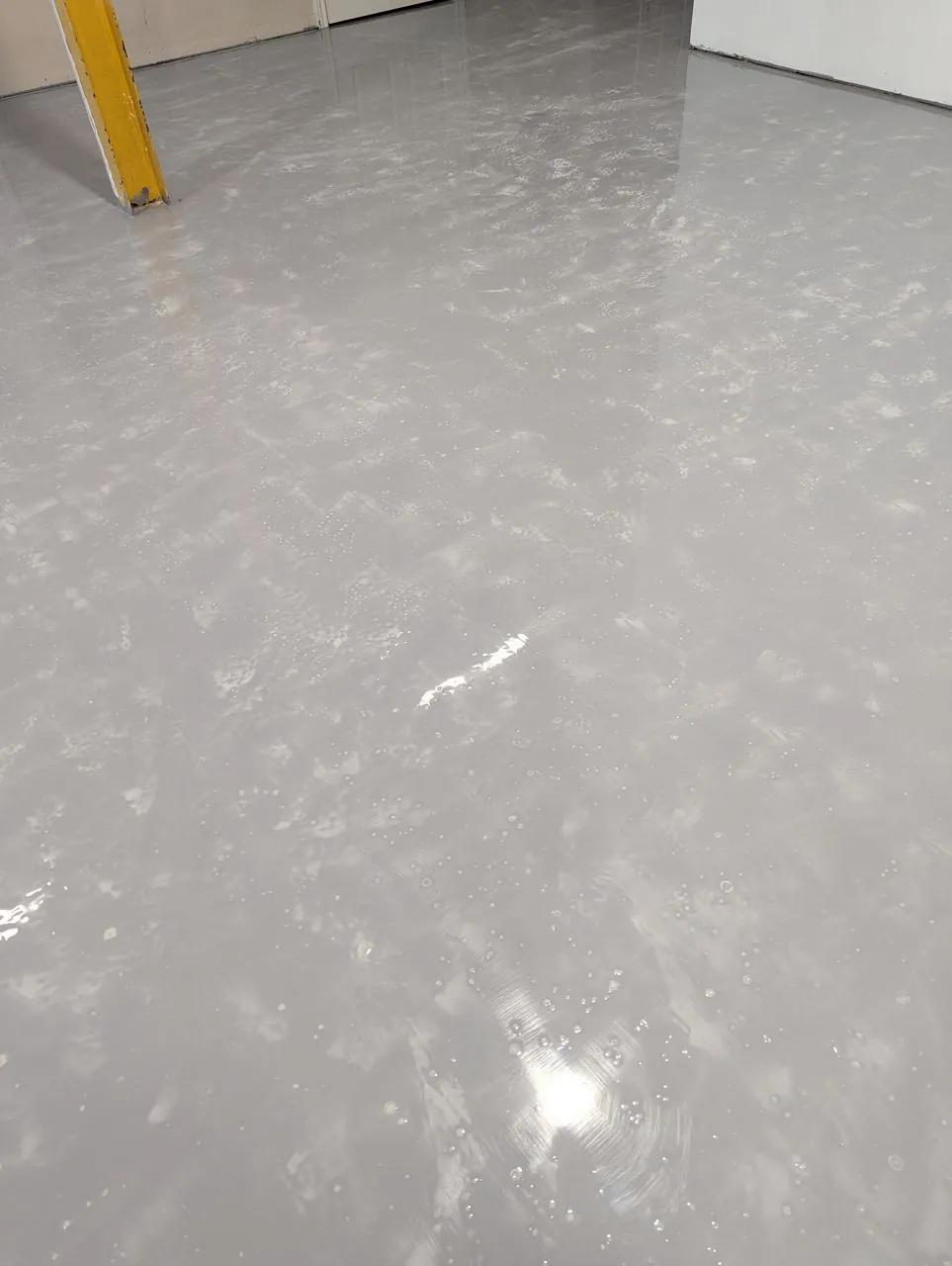
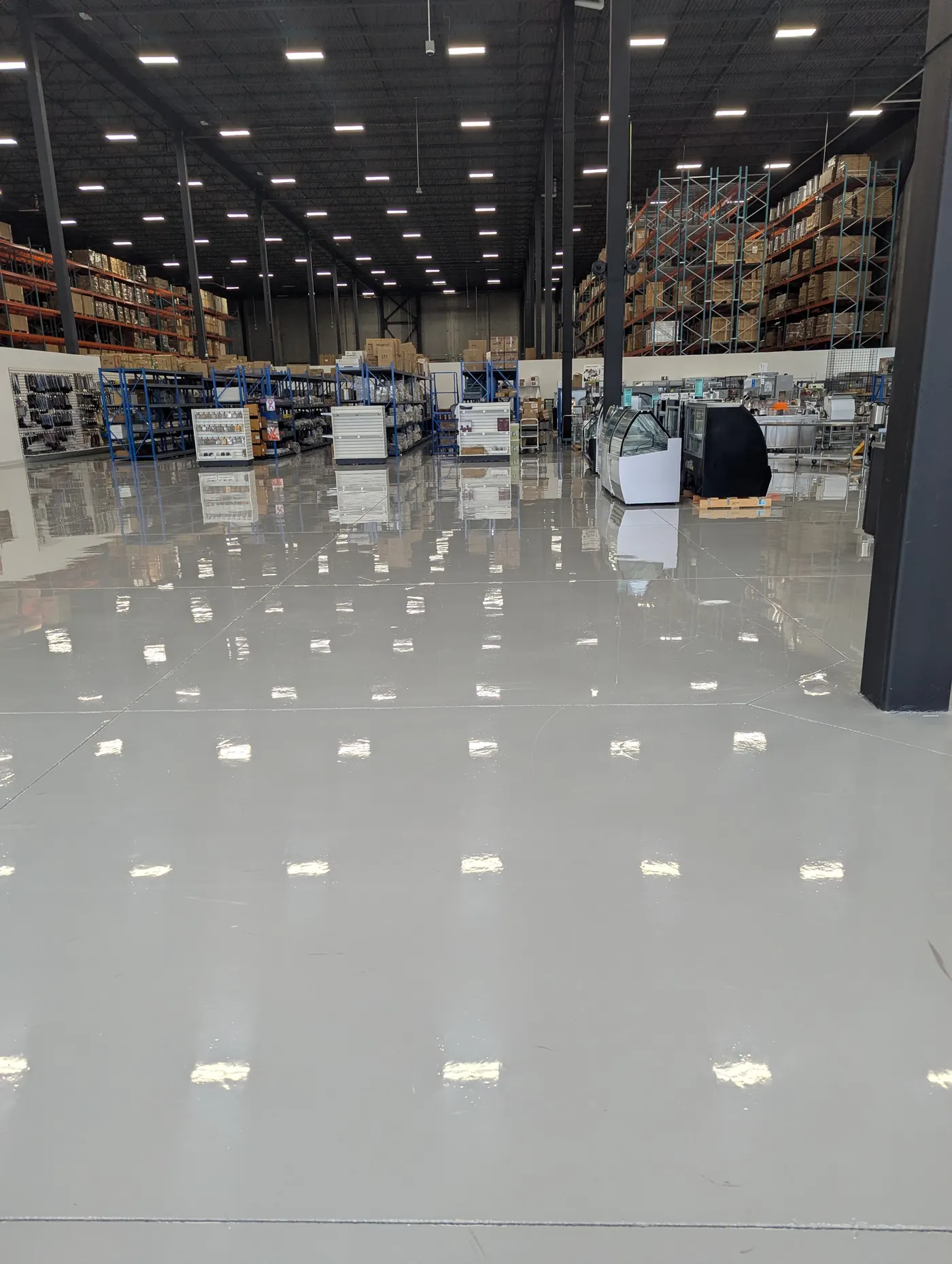
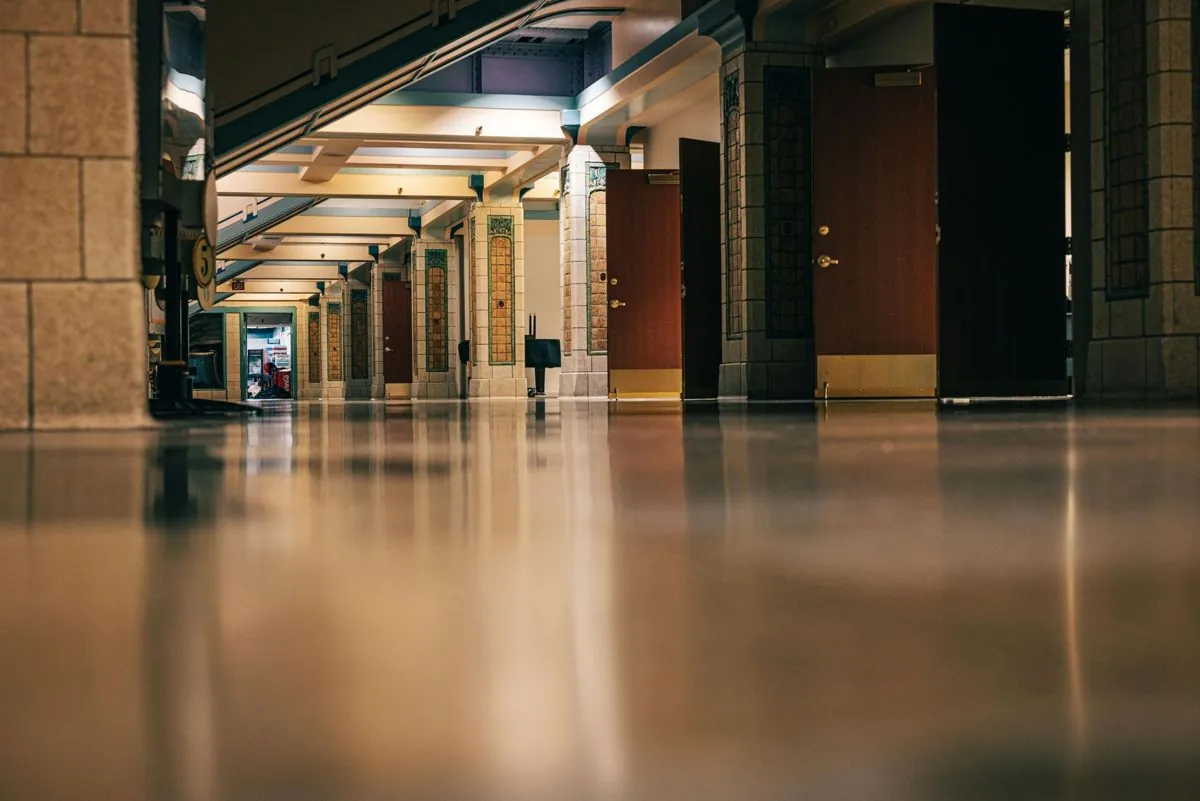
Twenty-seven Google reviews, a 5.0 average, and Christopher replies to every one of them personally. He is also the person who will be standing on your floor, which is not true of most companies quoting this work.
"I had the pleasure of working with Surface Coating Experts, owned by Christopher, on a project in our condominium where one of the balconies and walkways required a complete repair."
What customers mention most: garage floor installation, epoxy quality, detailed work, and a smooth process from first quote to finished floor.
Every review gets a personal reply from the owner - the after-the-job care that keeps the rating a perfect 5.0.
This is not a sales call with a clipboard. An Oakville building is either mature south-end stock with a slab poured before vapour retarders were standard, or a newer north-end build where the concrete has not finished drying, and those need opposite answers. The assessment is how we find out which one you have before anybody quotes a number.
Free. No obligation. Usually within the week.
Prefer to talk it through? Call (905) 876-6957, Monday to Saturday, 6am to 6pm.
Tell us where the floor is and what runs on it. We will come out, test it and put a fixed price in writing.
Same service nearby: Electronics & ESD in Burlington · Electronics & ESD in Hamilton
Shutdown and long-weekend windows across Oakville's industrial districts get spoken for well ahead, so if you are aiming at a particular weekend, start the conversation early rather than late. And if the slab tests wet, moisture mitigation adds material lead time. Neither is a reason to rush a decision, both are reasons to get the testing done now while it costs you nothing.
Also see our industrial & commercial overview, epoxy flooring in Oakville and published pricing.
Tell us the square footage, what runs on the floor and when the building can be quiet. We come out, test the slab and put the scope and the sequence in writing.
Free, no obligation, and you keep the written scope whether you use us or not.